Inside ProPak: Trends, ROI & Innovation
ProPak Knowledge Center

1-3 September 2027
EIEC
1-3 September 2027
EIEC
ProPak Knowledge Center
In today’s competitive manufacturing landscape, visibility matters. But strategic visibility matters even more. Exhibiting at a processing and packaging exhibition is no longer just about showing up with a booth. It’s about putting your brand in front of the right decision-makers, at the right time, in an environment built for business growth.
Across the region, manufacturing exhibitions and packaging trade shows in the MENA region are playing a critical role in helping companies scale faster, enter new markets, and stay ahead of industry trends.

Across the MENA region’s fast-growing manufacturing sector, demand for advanced processing and packaging technology is accelerating. Food and beverage producers are actively searching for equipment that improves efficiency, ensures compliance, and supports scalable growth. At the same time, technology providers are looking for direct access to serious buyers who are ready to invest.
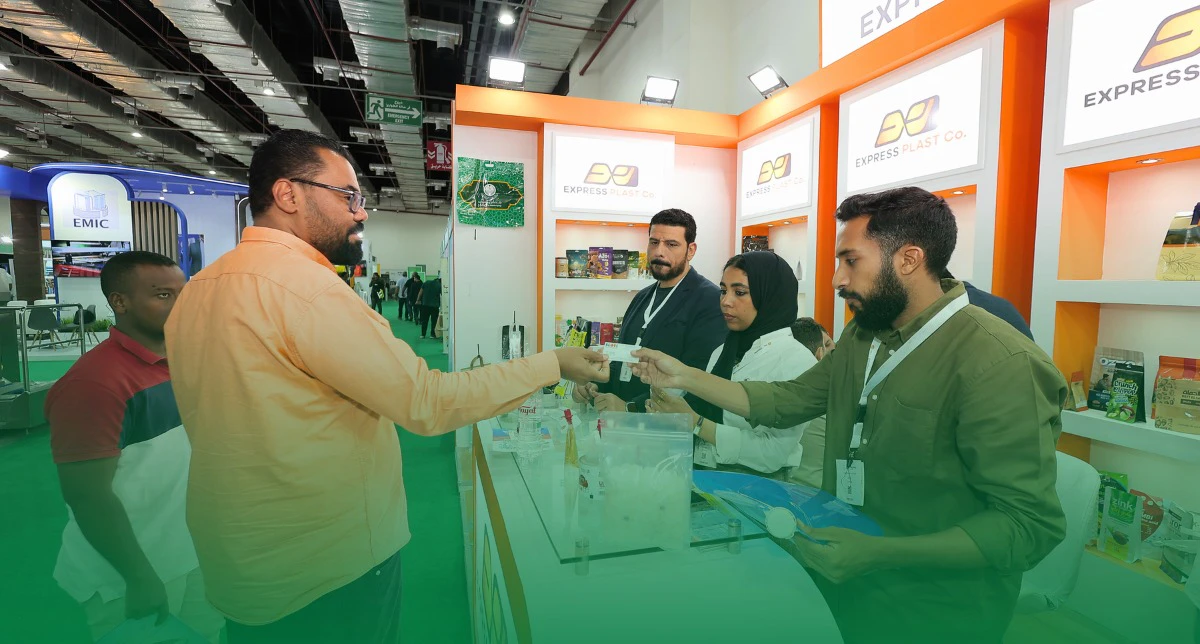
The packaging industry across the Middle East and North Africa is experiencing rapid growth, and packaging materials suppliers in the MENA region are a huge part of this expansion. Driven by population growth, rising consumption, and a booming food and beverage sector, demand for innovative and sustainable packaging products has never been higher.

Winning business in manufacturing isn’t about casting the widest net; it’s about being in the right room with the right people. For processing and packaging exhibitors, that room is increasingly the exhibition floor, where conversations turn into meetings, and meetings turn into signed packaging contracts.
At ProPak MENA, exhibitors don’t just collect contacts; they generate real B2B manufacturing leads with buyers who are actively sourcing solutions.

The packaging industry across the Middle East and North Africa is experiencing rapid growth, and packaging materials suppliers in the MENA region are a huge part of this expansion. Driven by population growth, rising consumption, and a booming food and beverage sector, demand for innovative and sustainable packaging products has never been higher.
Packaging production is becoming faster, smarter, and more precise. And industrial robots automation is at the heart of this shift. As manufacturers look to improve efficiency, reduce downtime, and maintain consistent quality, automation is no longer optional. It’s a must for modern packaging performance.
From handling to end-of-line operations, robotics is helping manufacturers streamline workflows and scale production with greater control.

In food manufacturing, safety is not a standalone checkpoint at the end of the line. It has to run through sourcing, processing, packaging, storage, and distribution. That is why food safety systems are such a critical part of modern operations. They help manufacturers reduce risk, meet regulatory expectations, protect product quality, and build trust with customers and supply chain partners.

In modern manufacturing, packaging is no longer just about sealing a product and sending it to market. It is also about identification, compliance, efficiency, and visibility across the supply chain. That is why the labeling and coding technology has become such an important part of packaging lines. From date marking and batch coding to advanced labels and connected traceability tools, these systems help manufacturers protect product integrity while making operations smarter and more responsive.

In manufacturing, packaging is one of the areas where small inefficiencies can quickly become expensive. Slow changeovers, material waste, machine downtime, poor line layout, and manual bottlenecks can all affect output. That is why improving packaging efficiency is a priority for manufacturers looking to reduce costs, increase speed, and maintain consistent quality.

For small food manufacturers, growth often starts creating new production challenges. What once worked with manual preparation and small-scale operations can quickly become difficult to manage as demand increases. Maintaining consistency, improving hygiene, reducing waste, and keeping up with orders all become more important. This is where the right food processing equipment can help businesses move into a more stable and scalable stage of production.

High-speed production lines depend on accuracy as much as speed. For food, beverage, FMCG, and packaging manufacturers, printing and coding solutions are essential for keeping products compliant, traceable, and retail-ready without slowing down operations.